


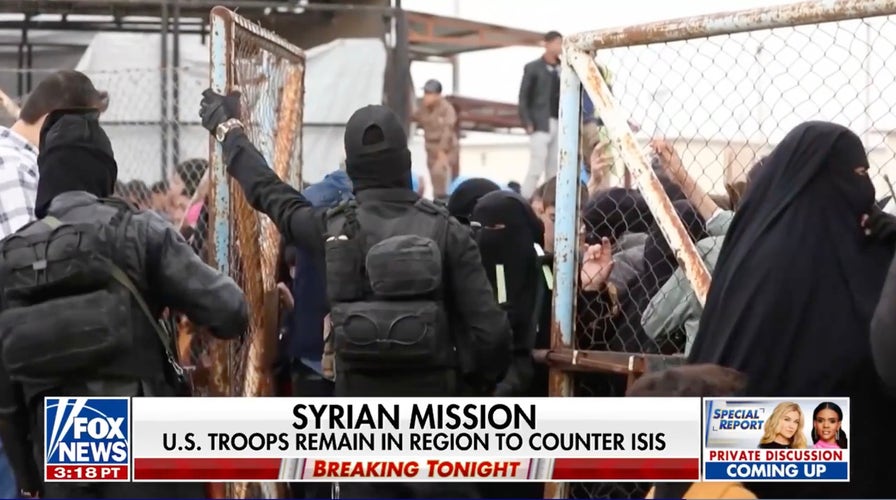
 Video
Video US troops remain in Syrian region to counter ISIS
Fox News chief national security correspondent Jennifer Griffin has the latest on President Donald Trump’s response to the deadly ambush of two National Guardsmen in Syria on ‘Special Report.’
While Washington debates future threats from China, Iran and Russia, U.S. forces remain engaged in conflicts most Americans believe ended years ago — in Syria, Iraq, Somalia and Yemen.
The missions are smaller and quieter than the wars that defined the post-9/11 era. There are no troop surges or primetime speeches.
But American service members continue to conduct raids, launch airstrikes and intercept enemy fire under war authorities passed more than two decades ago — long after public attention moved on.
The wars did not end. They simply faded from view.
DEADLY STRIKE ON US TROOPS TESTS TRUMP’S COUNTER-ISIS PLAN — AND HIS TRUST IN SYRIA’S NEW LEADER
Some 40,000 U.S. troops remain stationed in the Middle East, as of June — a reminder that America’s military footprint there has shrunk, but never disappeared.
Roughly 900 U.S. troops remain deployed in eastern Syria, where American forces continue counterterrorism operations against the Islamic State group and defend themselves from Iranian-backed militias.
The mission is officially described as a stabilization effort following ISIS’s territorial defeat. In reality, U.S. troops still face rocket, drone and indirect fire attacks, particularly as regional tensions rise.
American forces operate alongside the Syrian Democratic Forces, targeting ISIS cells that continue to carry out assassinations, ambushes and prison-break attempts.
The mission was thrust back into the spotlight in December when two National Guardsmen and one American contractor were shot and killed by a lone suspected Islamic State fighter in Syria.
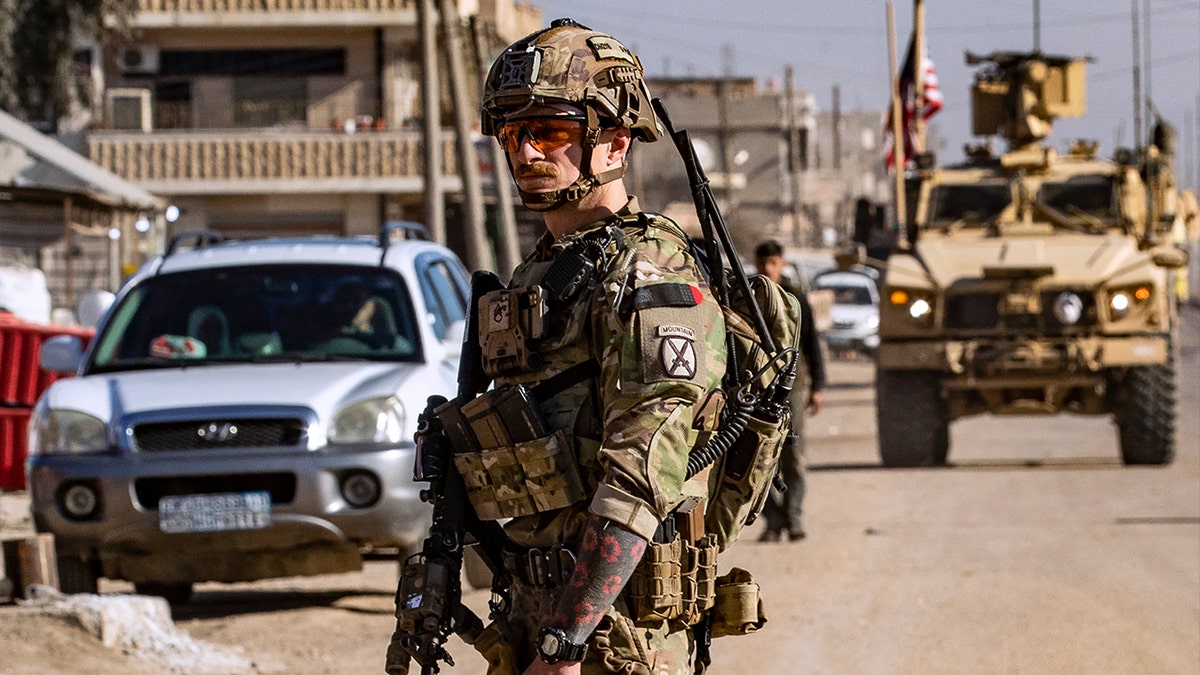
Some 900 US troops are still stationed in Syria. (Delil Souleiman/AFP via Getty Images)
U.S. airstrikes and special operations raids have continued even as Syria largely has vanished from the national conversation. There is no declared war and no defined end state — yet American troops remain in an active combat environment.
The U.S. military entered Syria in 2014 as part of the campaign against the Islamic State, launching airstrikes and later deploying special operations forces to work with local partners. The American footprint expanded during the fight to dismantle ISIS’s self-declared caliphate, with U.S. troops embedded alongside Kurdish-led forces in eastern Syria.
After ISIS lost its territorial hold in 2019, Washington sharply reduced its presence but did not fully withdraw, keeping several hundred troops in the country to prevent an ISIS resurgence and counter Iranian-backed militias. Despite repeated calls to end the mission, U.S. forces have remained in Syria for more than a decade, operating without a formal declaration of war and under post-9/11 authorities that were never repealed.
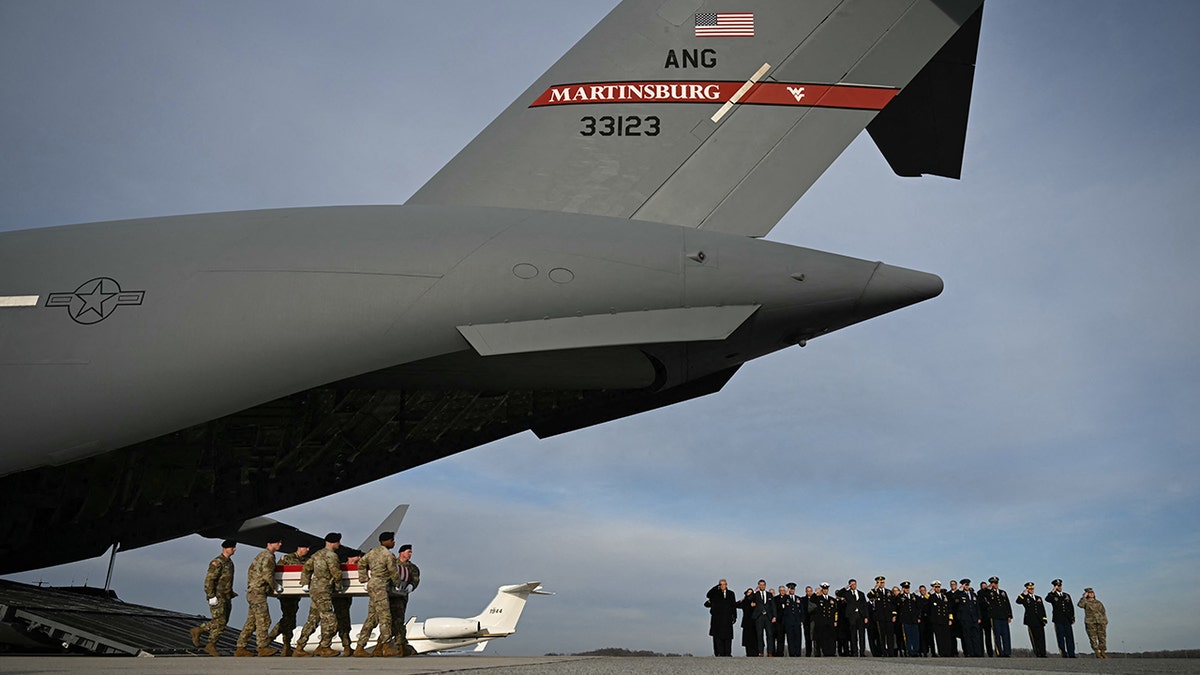
The Syria mission was thrust back into the spotlight when two National Guardsmen and one American contractor were shot by a lone suspected Islamic State fighter in Syria. (Andrew Caballero-Reynolds/AFP via Getty Images)
The U.S. military mission in Iraq is shrinking, but it has not yet concluded.
Under an agreement reached with Baghdad, Washington has begun drawing down its forces and transitioning responsibility for countering the Islamic State to Iraqi security forces. The American-led coalition is expected to reduce its footprint by roughly 20% of the some-900 forces that remained, consolidate remaining troops largely in the Kurdish region and wind down its mission by September.
Even as the drawdown proceeds, U.S. forces have continued to face threats from Iranian-backed militias, particularly during periods of heightened regional conflict. American troops retain the authority to defend themselves and to strike ISIS targets if the group shows signs of resurgence.
The Iraq war no longer resembles the conflict Americans remember from the 2000s. But U.S. troops are still deployed, still armed and still operating in a country where the risk has not disappeared, even as Washington works toward a responsible transition.
The U.S. military entered Iraq in 2003 with the invasion that toppled Saddam Hussein, launching a war that would define American foreign policy for the next decade. U.S. forces remained in large numbers through years of counterinsurgency fighting before formally ending combat operations and withdrawing in 2011.
American troops returned in 2014 after the Islamic State seized large parts of Iraq, leading a U.S.-led coalition that helped Iraqi forces roll back ISIS’s territorial gains. Since then, the U.S. mission has steadily narrowed from combat to advising and assistance, and in 2024 Washington and Baghdad agreed to wind down the coalition’s role, beginning a phased drawdown that is still underway.
Few Americans realize the United States is still conducting one of its most persistent counterterrorism campaigns in Somalia.
U.S. special operations forces are deployed alongside Somali government troops fighting al-Shabab, an al Qaeda-linked terrorist group that continues to carry out deadly attacks. American airstrikes remain a regular feature of the mission, though details are often released sparingly or after the fact.
There is no large U.S. troop presence and little sustained media coverage. But the fighting never stopped.
The U.S. military presence in Somalia dates back to the early 1990s, when American forces intervened as part of a humanitarian mission during the country’s civil war. That deployment ended in 1994 after the deadly "Black Hawk Down" battle in Mogadishu, which killed 18 U.S. service members and led Washington to withdraw.
For years afterward, U.S. involvement was limited, but American forces gradually reentered Somalia in the 2000s through counterterrorism strikes and advisory missions as al-Qaeda–linked groups gained ground.
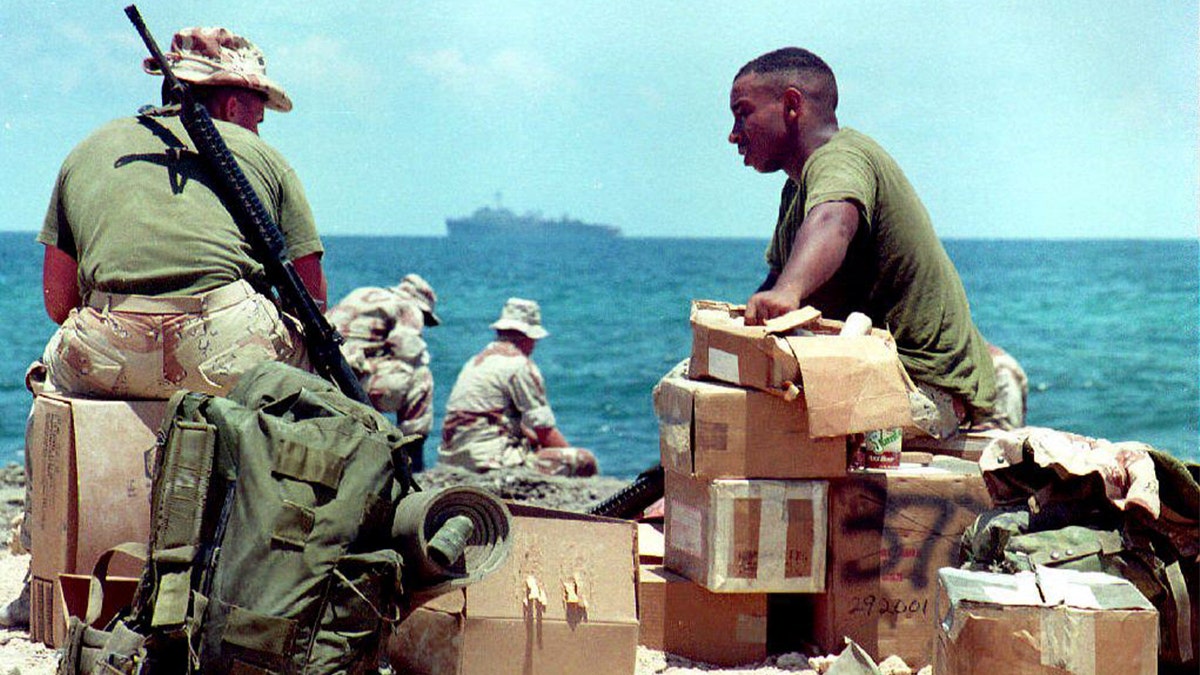
The U.S. military presence in Somalia dates back to the early 1990s, when American forces intervened as part of a humanitarian mission during the country’s civil war. (Pascal Guyot/AFP via Getty Images)
The U.S. expanded its presence again after 2017, conducting regular airstrikes and deploying special operations forces to assist Somali troops fighting al-Shabab. In late 2020, the Trump administration ordered most U.S. forces to withdraw, shifting to an "over-the-horizon" posture.
The Biden administration reversed that decision in 2022, redeploying several hundred U.S. troops to Somalia, where they remain today as part of an ongoing counterterrorism mission.
Some 500 U.S. troops are stationed in Somalia, and earlier in 2025 War Secretary Pete Hegseth emphasized the importance of maintaining a footprint in Africa.
"Africa is very much the front lines from a fight you’ve got Islamists, you’ve got Christian populations that are under siege in Africa that have been ignored for far too long."
"We’re not trying to have American boots all over the globe," he said when asked in February whether the Trump administration would keep troops in Somalia. "We’ll review the force posture there, with the generals doing the heavy lifting."
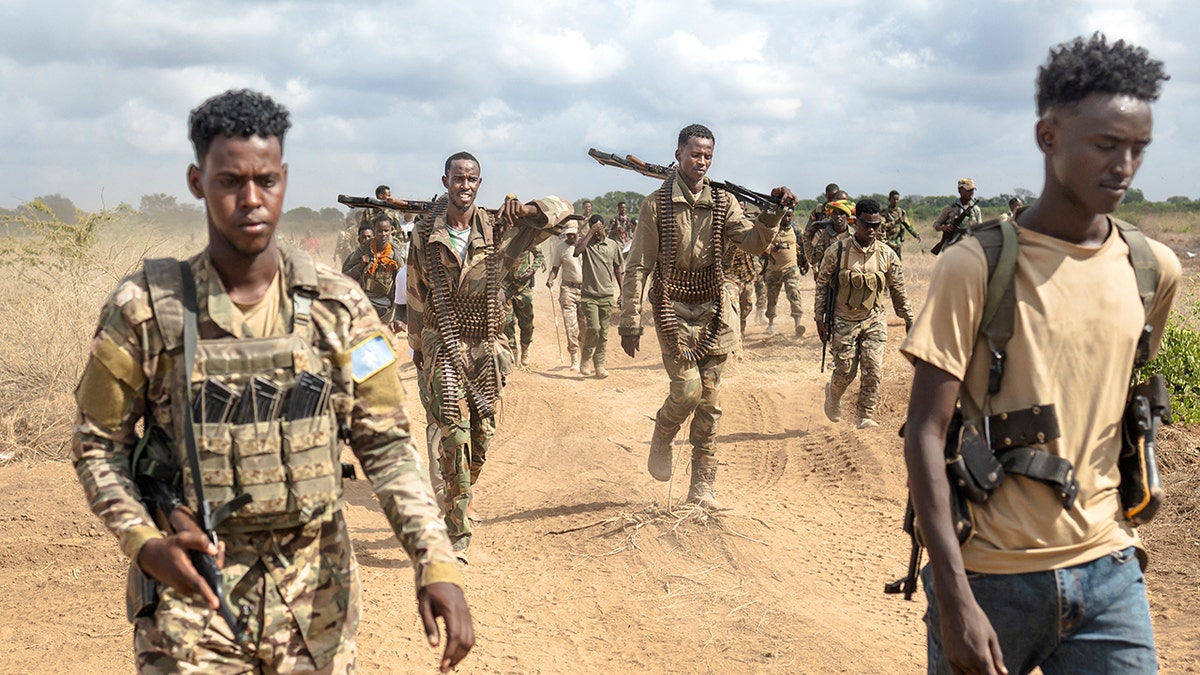
The U.S. expanded its presence again after 2017, conducting regular airstrikes and deploying special operations forces to assist Somali troops, like those above, fighting al-Shabab. (Tony Karumba/AFP via Getty Images)
The U.S. does not have a base presence in Yemen but frequently trades attacks with Houthi rebels settled there.
U.S. naval and air forces have intercepted missiles and drones launched by Iran-backed Houthi forces targeting international shipping lanes in the Red Sea and Gulf of Aden, placing American sailors and pilots in direct combat. The attacks have prompted U.S. strikes aimed at degrading the Houthis’ missile, drone and radar capabilities, as Washington seeks to protect global trade and deter further escalation.
In spring 2025, U.S. forces launched a weekslong air and naval campaign against Iran-backed Houthi targets across Yemen — hitting more than 1,000 sites linked to missile, drone and weapons infrastructure — in a sustained effort to blunt the rebels’ attacks on commercial and military vessels in the Red Sea and Gulf of Aden.
The U.S. has conducted 28 strikes on alleged narco-trafficking boats in the waters near Venezuela, killing a total of 103 people.
South and Central America have seen the largest U.S. military buildup in the region in decades: 15% of all naval assets are now positioned in the Southern Command theater, including the world’s largest aircraft carrier, the U.S.S. Gerald R. Ford.
US MILITARY STRIKES NARCO-TERRORIST VESSELS IN LATEST EASTERN PACIFIC DRUG TRAFFICKING OPERATION
So far, U.S. military action has stopped short of strikes on Venezuelan soil. But the scale and proximity of American forces underscore how quickly a campaign launched under counter-narcotics authorities could tip into a far more overt confrontation, one aimed at pushing leader Nicolás Maduro from power.
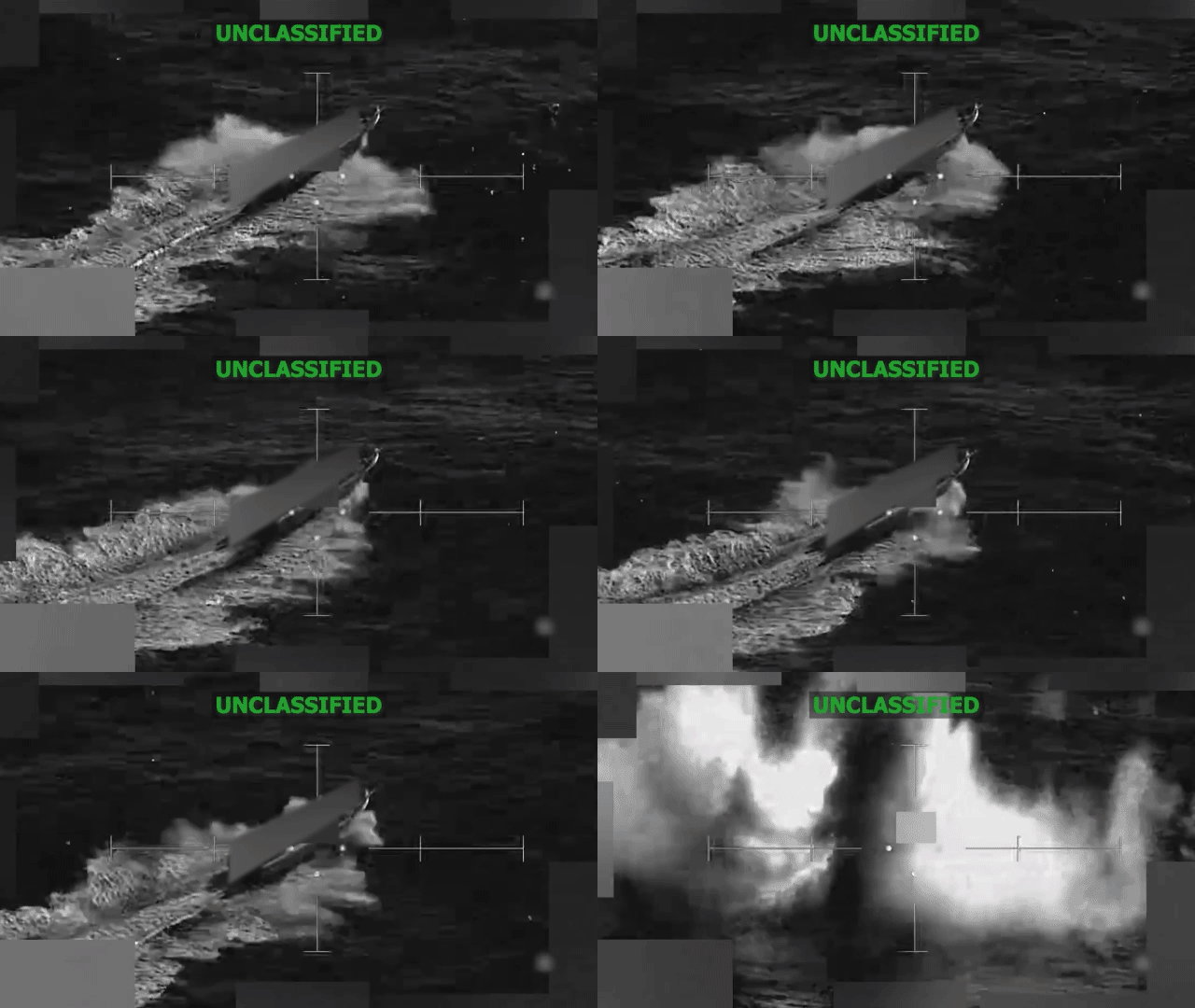
SOUTHCOM said it carried out a lethal kinetic strike that killed four male narco-terrorists in the Eastern Pacific. (U.S. Southern Command via X)
None of these conflicts were formally concluded by Congress. Most continue under the same post-9/11 authorizations passed more than two decades ago.
For the Middle East, the Trump administration has signaled that may change — but as long as the threat of Iran exists, it’s unlikely the U.S. will leave the region on a broad scale.
CLICK HERE TO DOWNLOAD THE FOX NEWS APP
"The days in which the Middle East dominated American foreign policy in both long-term planning and day-to-day execution are thankfully over — not because the Middle East no longer matters, but because it is no longer the constant irritant, and potential source of imminent catastrophe, that it once was," said the White House’s national security strategy, released earlier in December.
"It is rather emerging as a place of partnership, friendship, and investment — a trend that should be welcomed and encouraged."
https://www.foxnews.com/politics/from-syria-somalia-us-troops-remain-deployed-holiday-season-under-missions-never-formally-ended





Comments
0 comment